
$ 5.00
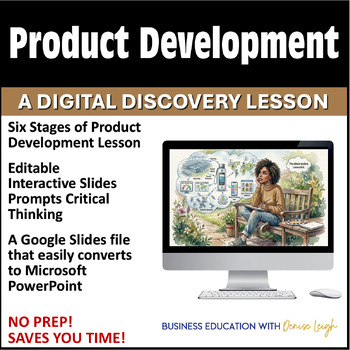
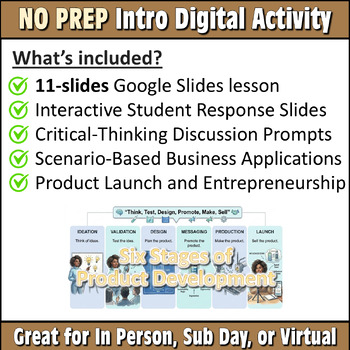
This engaging lesson introduces students to the six 6 stages of product development using a real-world product example students can easily understand and relate to. Through interactive activities and critical-thinking prompts, students learn how businesses take an idea from brainstorming to launch while exploring entrepreneurship, product design, marketing, production, and consumer behavior.
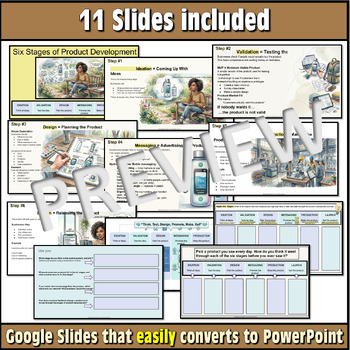
Students will analyze the complete product development process including ideation, validation, design, messaging, production, and launch while applying business concepts to realistic modern examples.
✅ Perfect for 9th, 10th, 11th, and 12th grades (High School) including homeschool

This engaging lesson introduces students to the six 6 stages of product development using a real-world product example students can easily understand and relate to. Through interactive activities and critical-thinking prompts, students learn how businesses take an idea from brainstorming to launch while exploring entrepreneurship, product design, marketing, production, and consumer behavior.
Students will analyze the complete product development process including ideation, validation, design, messaging, production, and launch while applying business concepts to realistic modern examples.
✅ Perfect for 9th, 10th, 11th, and 12th grades (High School) including homeschool
Why Teachers Will ❤️ This Lesson
✔️ Ready-to-Use – NO PREP required
✔️ Highly engaging and visually appealing
✔️ Real-world product development examples students understand
✔️ Encourages critical-thinking and discussion
✔️ Easy-to-follow business and entrepreneurship concepts
What Students Will Learn❓
💯 Perfect For Teaching:
What’s Included❓
⏱ Teaching Duration: Approximately 40 minutes + class discussions
🎯 What Class Is This For?
🧩 Student Activity Highlights
✔️ Analyze each stage of product development
✔️ Explore how businesses test ideas before launch
✔️ Apply critical-thinking to real-world business scenarios
✔️ Create and evaluate original product ideas
✔️ Examine marketing and messaging strategies
✔️ Explain how businesses bring products to market
🏫 AP Business with Personal Finance Course Framework Alignment
(College Board AP Business with Personal Finance CED – 2026-27)
This lesson aligns with the following AP Business with Personal Finance standards from Topic 2.4: Develop a Product Idea
• 2.4.A.1 – “Describe a market opportunity.”
Students identify customer needs and brainstorm product ideas during the ideation stage.
• 2.4.A.2 – “Describe a product idea that addresses a market opportunity.”
Students analyze how businesses create products designed to solve problems or meet consumer wants.
• 2.4.A.3 – “Explain how a product idea provides value to customers.”
Students evaluate why customers would purchase a product and how businesses communicate product value.
• 2.4.A.4 – “Describe characteristics of a target customer.”
Students examine how businesses design and market products toward specific audiences and consumer groups.
• 2.4.A.5 – “Explain how businesses test product ideas.”
Students learn about validation, MVPs (minimum viable products), customer feedback, and product-market fit.
• 2.4.A.6 – “Describe factors that influence product design decisions.”
Students analyze how businesses make decisions involving features, cost, quality, usability, and aesthetics.
• 2.4.A.7 – “Explain the stages of product development.”
Students explore the complete six-stage product development process including ideation, validation, design, messaging, production, and launch.
📥 File Type: Google Slides (Editable + Easily Converts to PowerPoint)
🎯This lesson is a great way to introduce students to entrepreneurship and product development while helping them build critical-thinking, business, and innovation skills they can apply to real-world careers and consumer decisions.
Only logged in customers who have purchased this product may leave a review.

Reviews
There are no reviews yet.