
$ 30.00
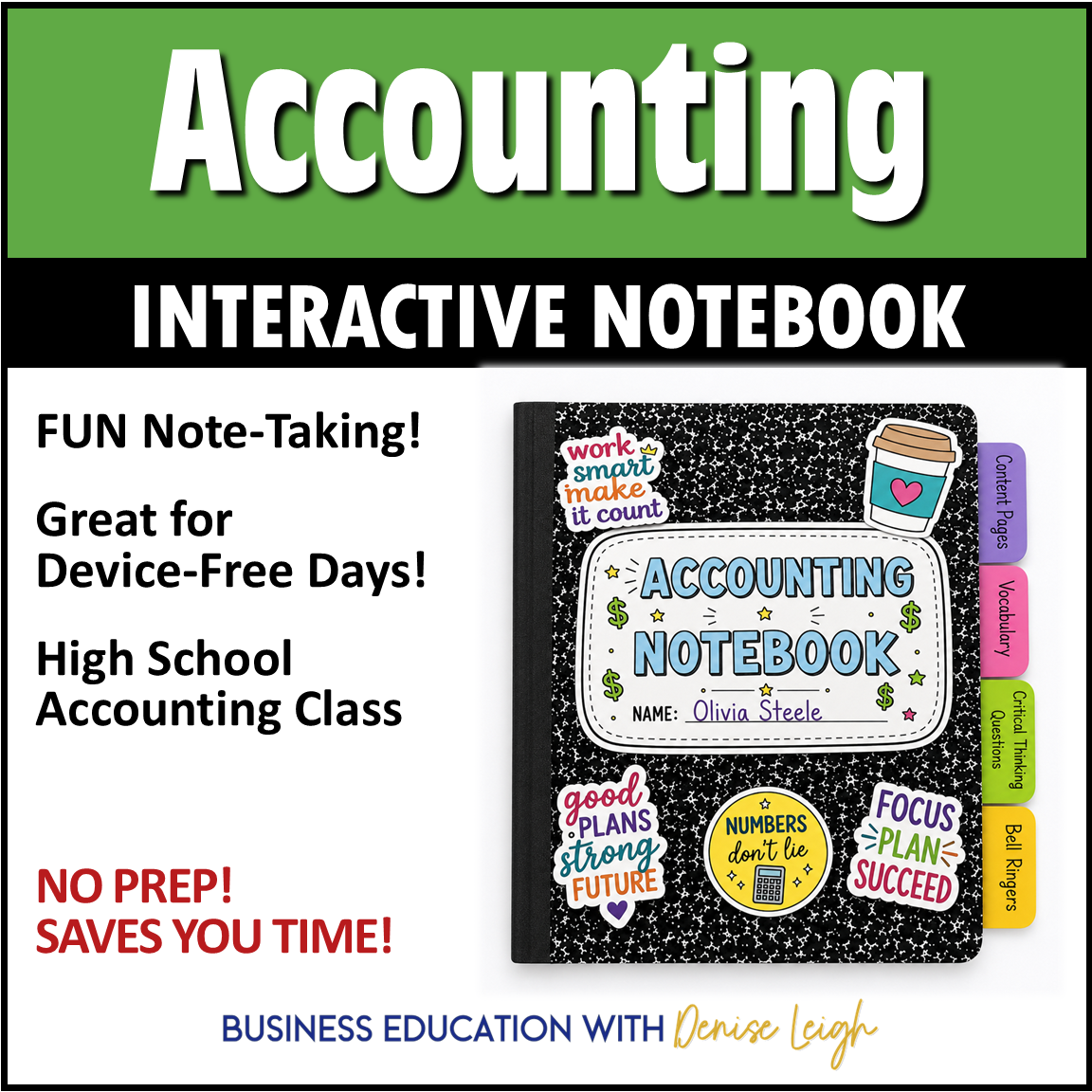
Give your students a fun, organized, and meaningful way to learn Accounting while getting them off their devices! My Accounting Interactive Notebook helps students actively engage with course content through structured note-taking, vocabulary development, bell ringers, reflection, and critical-thinking activities.
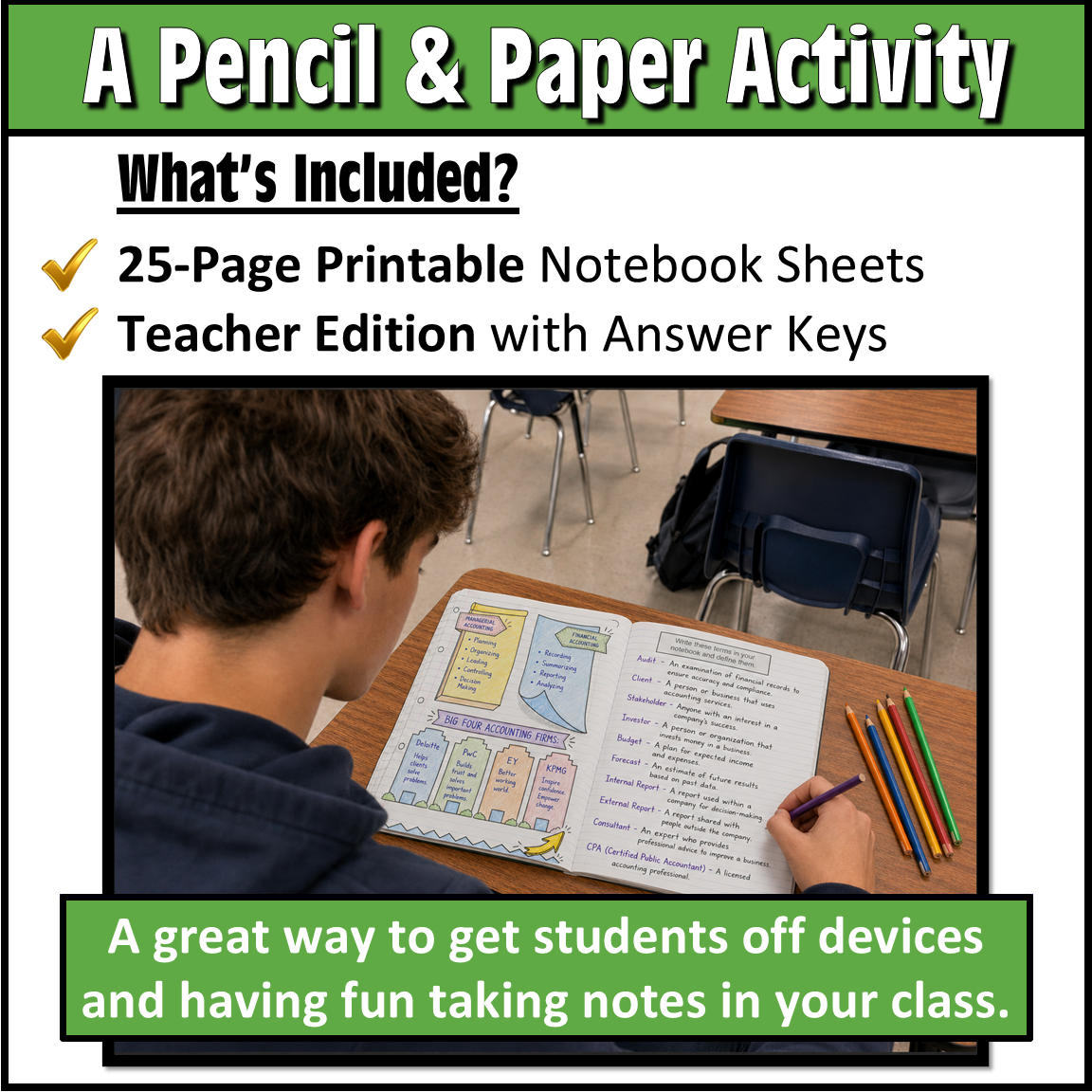
Instead of simply copying definitions or watching a presentation, students create a personalized Accounting notebook that becomes both a study guide and a valuable classroom reference. Students can color the pages, tape or glue them into a composition notebook, add vocabulary definitions, and respond to open-ended questions that require them to apply what they have learned.
This printable resource includes a 25-page Student Version, a completed Teacher Version, teacher instructions, grading suggestions, bell ringers, and sample answers.
✅ Perfect for 9th, 10th, 11th, and 12th grades (High School)

Accounting Interactive Notebook | High School Accounting Paper and Pencil (Printable) Activities
Give your students a fun, organized, and meaningful way to learn Accounting while getting them off their devices! My Accounting Interactive Notebook helps students actively engage with course content through structured note-taking, vocabulary development, bell ringers, reflection, and critical-thinking activities.
Instead of simply copying definitions or watching a presentation, students create a personalized Accounting notebook that becomes both a study guide and a valuable classroom reference. Students can color the pages, tape or glue them into a composition notebook, add vocabulary definitions, and respond to open-ended questions that require them to apply what they have learned.
This printable resource includes a 25-page Student Version, a completed Teacher Version, teacher instructions, grading suggestions, bell ringers, and sample answers.
✅ Perfect for 9th, 10th, 11th, and 12th grades (High School)
Why Teachers Will ❤️ This Interactive Notebook
✔️ Ready-to-use and Easy to Implement
✔️ Provides a meaningful technology-free learning option
✔️ Reinforces important Accounting vocabulary
✔️ Includes critical-thinking questions for major topics
✔️ Includes 30 Accounting bell-ringer questions
✔️ Works as guided notes, independent practice, review, or assessment
✔️ Includes a completed Teacher Version
✔️ Includes Teacher Instructions and Grading Suggestions
✔️ Designed to supplement a high school Accounting course
What’s Included❓
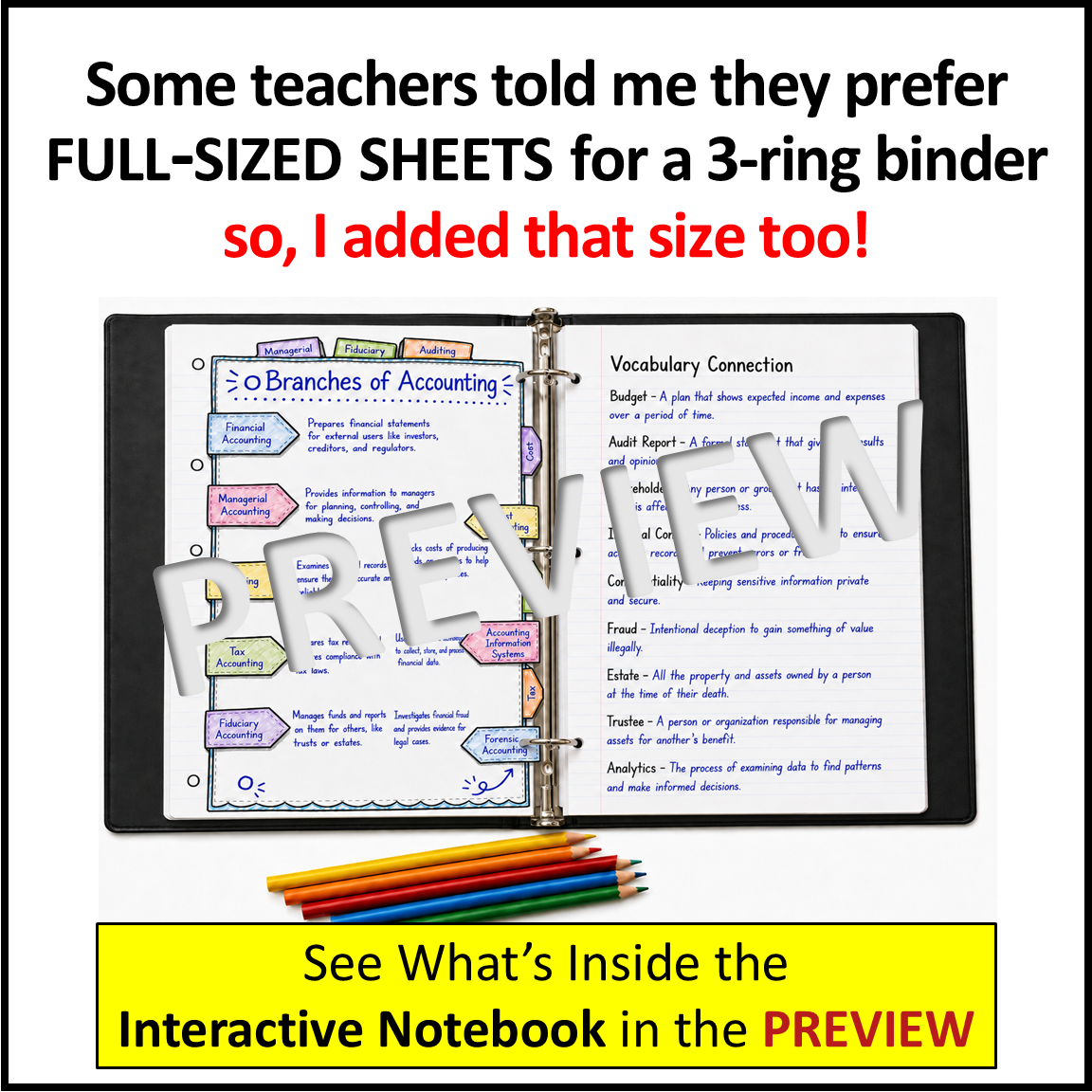
The resource includes pages designed for a traditional interactive notebook as well as full-size 8.5″ × 11″ sheets for teachers who prefer students to keep their work in a 3-ring binder.
⭐The Teacher Version includes completed examples of the notebook content pages so teachers can project the notes for students or use them as a reference during instruction.
💯 How the Interactive Notebook Works
Each major topic follows a consistent three-part format:
1. Content Page
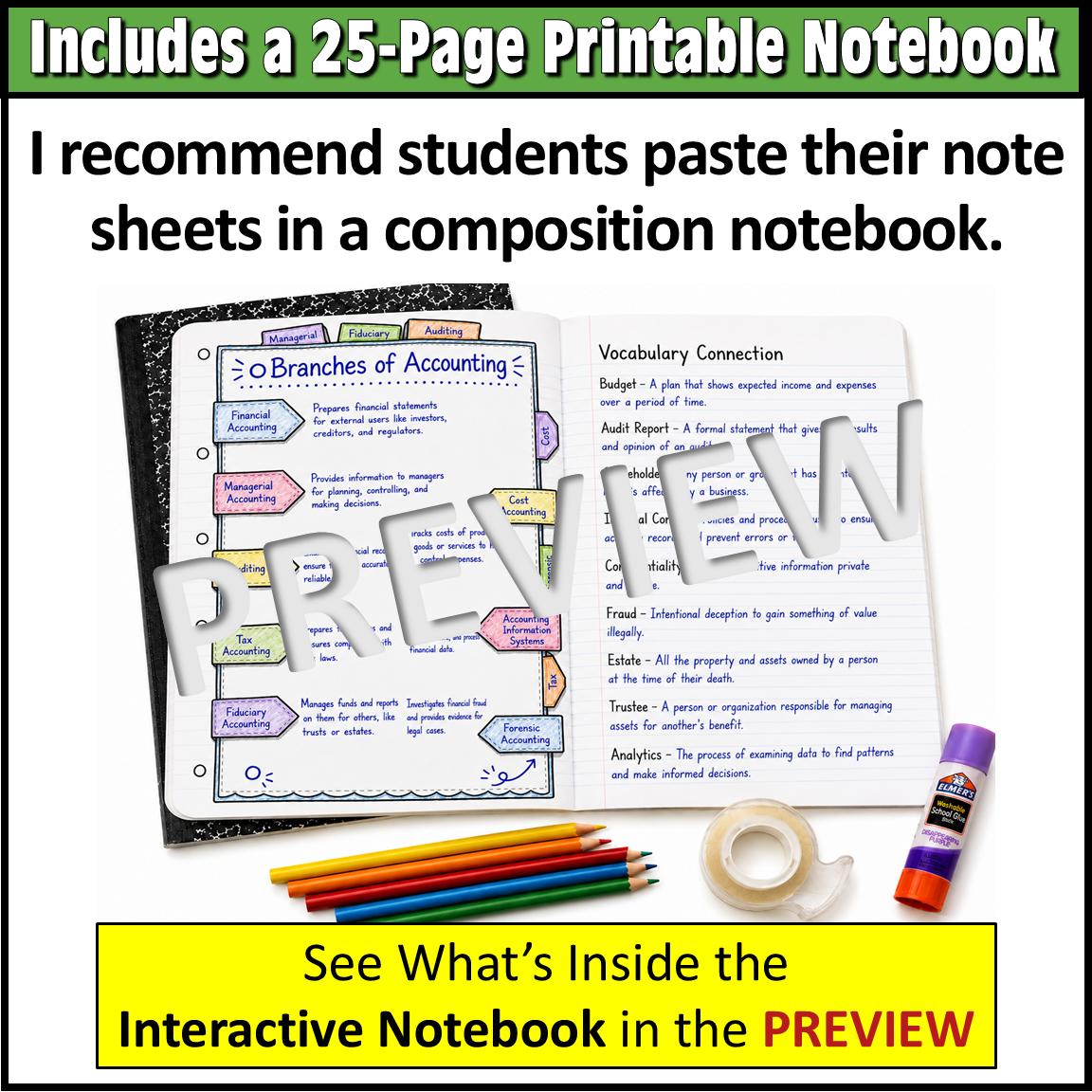
Students complete an illustrated content page that summarizes the major Accounting concepts. The page can be colored, completed, and attached to a composition notebook using tape or a glue stick. I recommend projecting the completed Teacher Version so students can accurately complete their notes while you teach or discuss the topic.
2. Vocabulary Connection
Students write the accompanying Accounting vocabulary terms on the opposite notebook page and define or explain each term. This helps students develop a strong working vocabulary while connecting Accounting terminology to the lesson content.
3. Critical-Thinking Questions
Students apply what they have learned through open-ended questions, business scenarios, financial situations, comparisons, and real-world applications.
What Students Will Learn❓
🎯 What Class Is This For?
🧩 Student Activity Highlights
✔️ Explain the purpose and importance of Accounting
✔️ Identify important tasks and skills of accountants
✔️ Compare business ownership structures
✔️ Apply basic Accounting principles and GAAP
✔️ Compare managerial and financial Accounting
✔️ Explore the Big Four Accounting firms
✔️ Examine multiple branches of Accounting
✔️ Classify assets, liabilities, and owner’s equity accounts
✔️ Connect account classifications to the Accounting equation
✔️ Identify common debits and credits
✔️ Analyze a business’s financial position
✔️ Compare the Income Statement, Balance Sheet, and Cash Flow Statement
✔️ Explain each step of the Accounting cycle
✔️ Respond to business and financial scenarios|
✔️ Complete Accounting bell ringers
✔️ Build a personalized Accounting study guide
📥 File Type: Printable Google Slides files (or convert to pdf or PowerPoint).
Students may use the pages in:
✔️ A composition notebook
OR
✔️ A 3-ring binder using the included full-size sheets
It is not an editable digital notebook.
⭐Perfect for Device-Free Days⭐
⚠️ Important Teacher-Key Information⚠️
The completed Teacher Version provides answers and examples for the illustrated content pages and bell ringers. The critical-thinking questions are intentionally open-ended. Because acceptable responses may vary, fixed answer keys are not provided for every critical-thinking question.
Accounting Topics Covered:
🎯 This Accounting Interactive Notebook gives students a creative and structured way to interact with course content while building Accounting vocabulary, critical-thinking skills, financial understanding, and business knowledge. By the end of the course, students will have created a personalized Accounting reference notebook they can use to review concepts, prepare for assessments, and connect Accounting procedures to real-world business decisions.
My Accounting Interactive Notebook is an excellent companion to My Ultimate Accounting Course.
Only logged in customers who have purchased this product may leave a review.
Reviews
There are no reviews yet.