Description
Account Classifications & T-Accounts Bundle | Assets, Liabilities, Owner’s Equity, Revenue/Sales, Owner’s Capital, Expenses & Owner’s Drawing
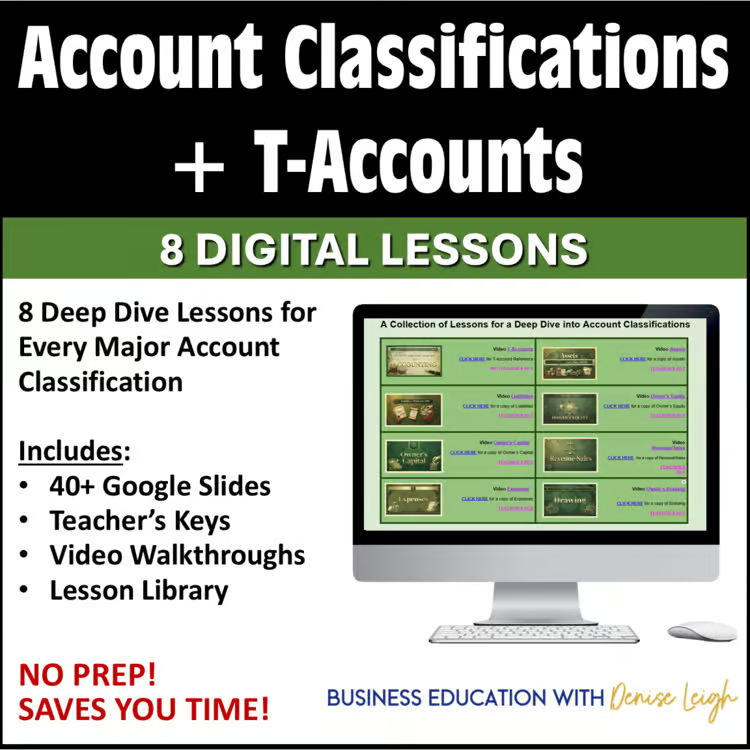
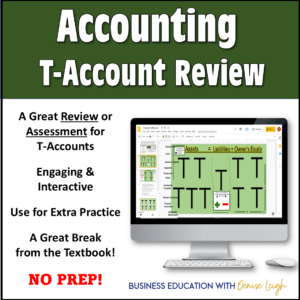
Help your students move beyond memorizing debits and credits by developing a deep understanding of the seven major account classifications used in accounting. This comprehensive lesson bundle teaches students what each account represents, why it exists, how businesses use it, and how it connects to real-world financial decisions before introducing T-Accounts and transaction analysis.
Unlike traditional accounting resources that focus primarily on memorization, this bundle uses engaging visuals, critical-thinking activities, authentic business scenarios, and guided practice to build true conceptual understanding.
Every lesson is presented in Google Slides (that easily convert to Microsoft PowerPoint) and includes an organized Lesson Library to help teachers quickly locate the lessons, teacher’s keys, and video walkthroughs (See Preview).
Video walkthroughs accompany every lesson, making this resource an excellent option for substitute teachers, absent students, independent learners, and homeschool families (YouTube access required).
What’s Included❓
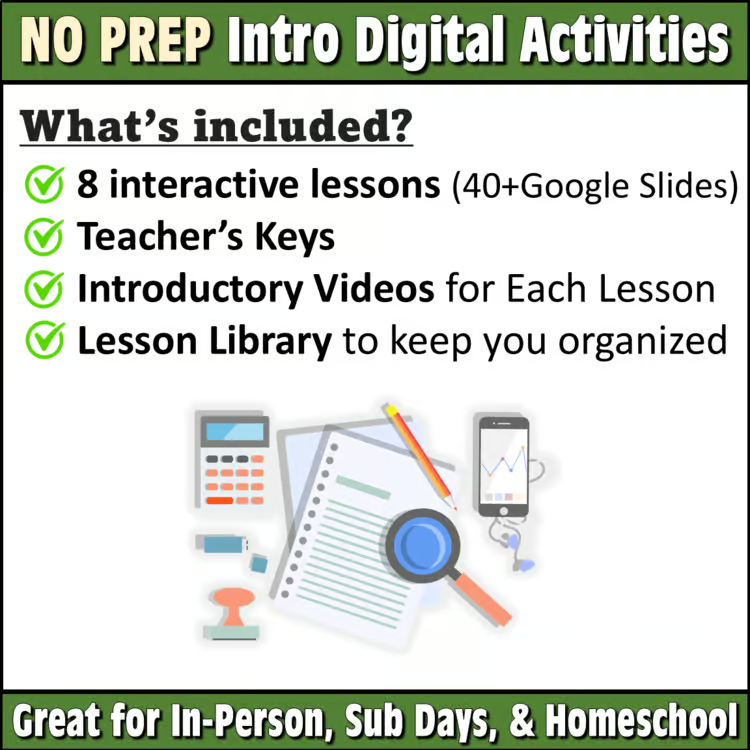
✅ 40+ Interactive Google Slides (easily Converts to Microsoft PowerPoint)
✅ Teacher Answer Key
✅ Video Walkthroughs (YouTube access required)
✅ Discussion and Critical-Thinking Questions
Topics Included:
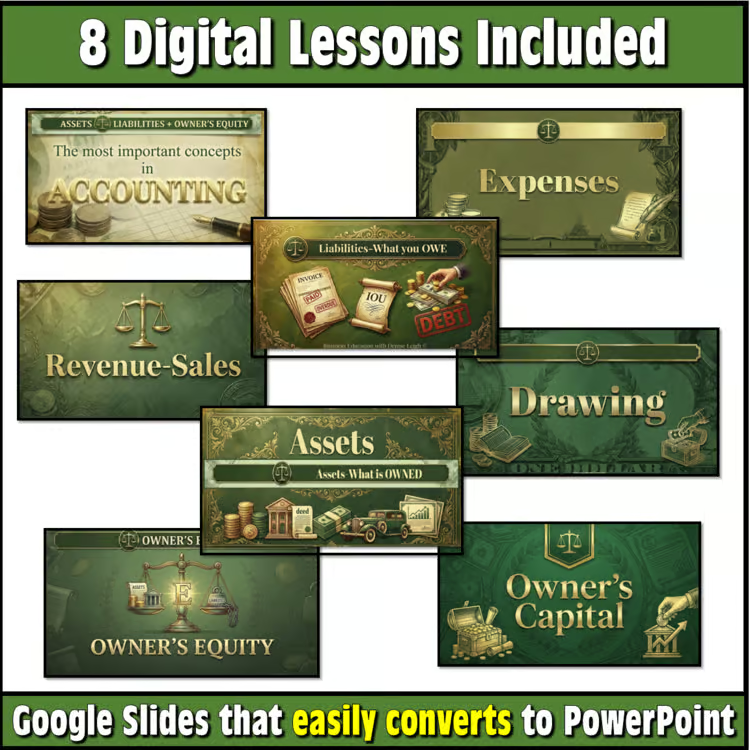
Assets
Students explore what businesses own, why assets have value, the Accounting Equation, current versus long-term assets, and how assets help businesses operate.
Liabilities
Students learn what businesses owe, how debt can support business growth, common liability accounts, and the difference between liabilities and expenses.
Owner’s Equity
Students examine how owner’s equity changes through investments, profits, drawings, and expenses while strengthening their understanding of the Accounting Equation.
Owner’s Capital
Students investigate how owner investments increase business value through real-world examples, partnerships, and capital calculations.
Revenue (Sales)
Students distinguish between revenue and sales, explore revenue recognition under GAAP, analyze real business scenarios, and apply the realization of revenue principle.
Expenses
Students identify common business expenses, distinguish expenses from Accounts Payable, compare fixed and variable expenses, and understand why expenses always increase with a debit.
Owner’s Drawing
Students learn how owner withdrawals affect owner’s equity, apply the Business Entity Principle, and distinguish personal transactions from business expenses.
Throughout this resource students will:
- Identify and classify the major account classifications.
- Understand how each classification fits into the Accounting Equation.
- Compare commonly confused accounting concepts.
- Analyze authentic business situations.
- Apply GAAP concepts to real business examples.
- Explain accounting decisions using critical thinking.
- Strengthen conceptual understanding before recording transactions in T-Accounts.
Why Teachers Will ❤️ This Resource
This resource focuses on understanding before memorization. Students don’t simply memorize that Assets increase with debits or Revenue increases with credits—they learn why those rules exist through engaging visuals, authentic business examples, and meaningful classroom discussions.
The consistent lesson structure also makes planning simple. Every topic follows a similar progression from concept introduction to application, allowing students to build confidence while giving teachers an organized, easy-to-teach accounting unit.
💯Perfect for
- Introduction to Accounting
- Principles of Accounting
- High School Accounting
- Financial Accounting
- AP® Business with Personal Finance
- CTE Business Courses
- Business Education
- Homeschool Accounting
- Accounting Review & Reinforcement
- Sub Plans & Independent Learning
✅ Perfect for 9th, 10th, 11th, and 12th grades (High School)
📥 Files Type Included:
- Google Slides (Easily converts to PowerPoint)
- Videos (YouTube access required)
Only logged in customers who have purchased this product may leave a review.




Reviews
There are no reviews yet.