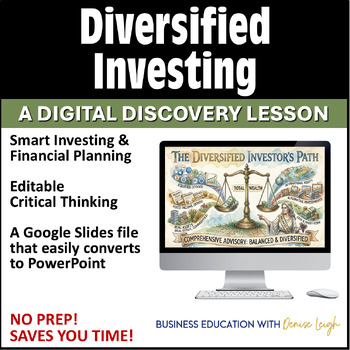
This engaging lesson introduces students to diversification, asset allocation, investment risk, financial planning, and portfolio benchmarking. Students explore how investors build balanced portfolios, manage financial risk, evaluate investment timelines, and measure investment success.
Students will analyze diversification strategies, risk tolerance, asset allocation, investment timelines, benchmarks, and financial advisor qualifications while applying investment concepts to realistic financial planning scenarios.
✅ Perfect for 9th, 10th, 11th, and 12th grades (High School) including homeschool
💯 Perfect For Teaching:
Diversification
Asset allocation
Risk tolerance
Investment planning
Long-term investing
Financial decision-making
Portfolio management
Benchmarking investment performance
Financial literacy and wealth building
What Students Will Learn❓
What diversification means and why investors use it
How spreading investments reduces financial risk
How investors build goal-based asset allocation plans
Why time horizon affects investment choices
The relationship between risk tolerance and expected return
How investors compare investment performance using benchmarks
Why diversification helps protect long-term wealth
How to evaluate qualified financial professionals
How investors balance growth opportunities with financial security
What’s Included❓
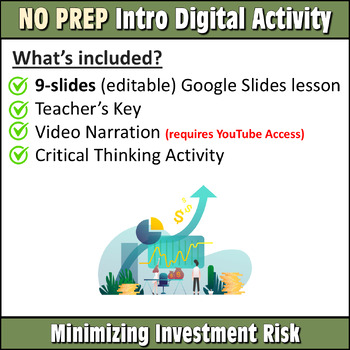
- 9-slide (editable) Google Slides slideshow lesson (easily converts to PowerPoint)
- ▶️ 2-minute Video Narration of Slideshow (requires YouTube Access)
- Teacher’s Key
- Critical Thinking Slide
⏱ Teaching Duration: Approximately 30 minutes + class discussions
🎯 What Class Is This For?
AP Business with Personal Finance
Personal Finance
Financial Literacy
Economics
Entrepreneurship
Introduction to Business
🏫 AP Business Alignment
This lesson aligns with:
• 5.3.C.1 – Explain the purpose and importance of diversification in investment planning
• 5.3.C.2 – Describe how investors allocate assets across different investment categories to manage risk and pursue financial goals
• 5.3.C.3 – Explain how time horizon influences investment decisions and risk exposure
• 5.3.C.4 – Analyze the relationship between risk tolerance and expected investment returns
• 5.3.C.5 – Evaluate how benchmarks are used to measure investment performance and overall portfolio success
• 5.3.C.6 – Explain factors consumers should evaluate when selecting qualified financial professionals and investment advisors
📥 File Type: Google Slides (Editable + easily converts to PowerPoint)
🎯 This lesson is a great way to introduce students to investment diversification, financial planning, and portfolio management while helping them build financial literacy, critical-thinking, and long-term money management skills they can apply in future careers and everyday life.






Reviews
There are no reviews yet.