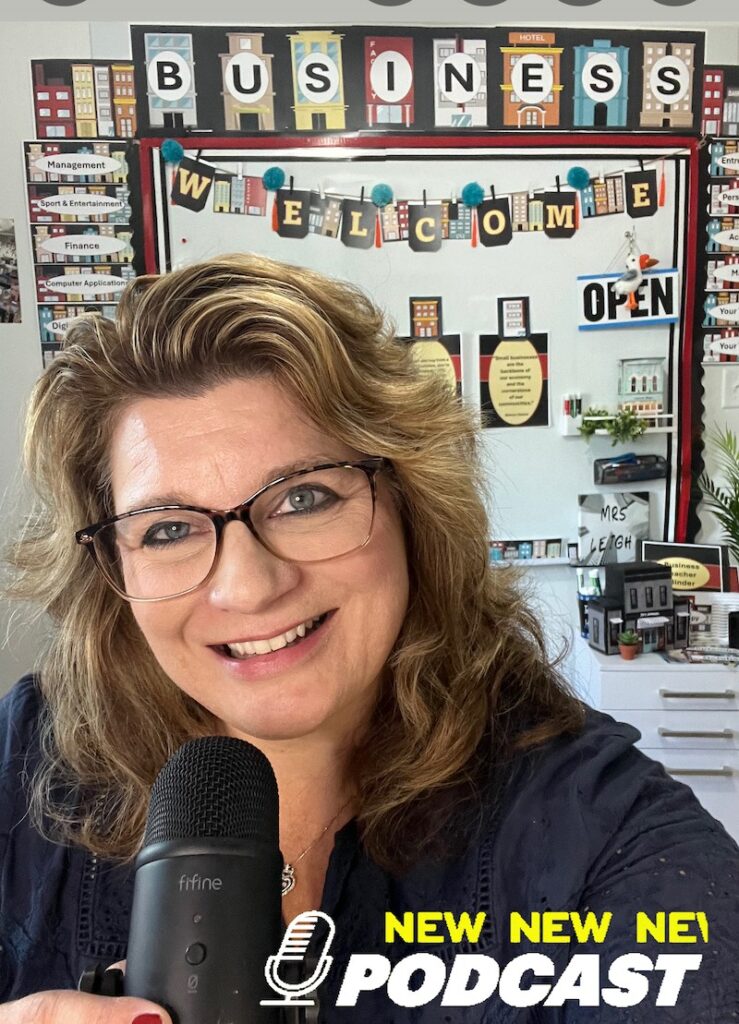
On Episode 26 of my podcast, I was joined by a fellow veteran teacher, Norman Whitten. Norman shared his insights on my City Collaborative™ project-based learning business education project, its post-pandemic impact in his business classroom, and advice for teachers like you seeking hands-on engagement and deeper student learning.
Rethinking Business Education: The City Collaborative™ Revolutionizes Classrooms
For many veteran teachers, business education once meant rows of desks, thick textbooks, and the hope that lecturing on accounting principles would ignite a spark. But as the landscape of student engagement evolves—especially post-pandemic—so too must our instructional approaches. The game changer for me was my City Collaborative™ project, an immersive, project-based learning (PBL) approach to business education that transforms your classroom into a hub of excitement and real-world connection.
The Spark That Lit the City: Why Engagement Matters Now
With over 35 years of teaching business under his belt, Norman knows firsthand how vital it is to keep students invested. Like many educators, he noticed a worrisome trend after the COVID-19 lockdowns: students were glued to screens, had grown less communicative, and rarely seemed genuinely engaged.
“I knew I needed something new in the classroom… It needed some type of spark,” Norman shares, reflecting on his search for hands-on, collaborative learning experiences. Enter the City Collaborative—a project where Introduction to Business students plan, build, and manage a model city, applying concepts from finance to entrepreneurship in a context that feels real and relevant.
The result? “My enrollments have just over doubled,” Norman reports. “The kids actually received it well. They will look forward to coming in… When are we going to start a business?”
Space, Supplies, and Inspiration: Making PBL Work in Any Setting
A common concern among teachers is logistics: “Do I have enough space? Do I need fancy materials?” The City Collaborative™ is scalable; it can fill four 8×4-ft platforms or live on shelving units, countertops, or even a bulletin board. The form is flexible—the focus is function and engagement.
In terms of supplies, it’s creativity, not cost, that’s key. Repurposed pasta, cracker, or Pop-Tart boxes become storefronts; cardboard, cardstock, duct tape, and miniature figures (often re-used year to year) flesh out the cityscape. Teachers and students source materials together, and donations from colleagues and parents help stock the supply “store.”
Anything that gets kids excited about coming to school is a win!
Student Growth Beyond the Syllabus: Ownership, Problem-Solving, and Collaboration
At the heart of the City Collaborative™’s magic is the way it flips the traditional classroom dynamic. Rather than spoon-feeding answers, teachers step back, letting students take the lead. When Norman let his class tackle city planning without jumping in to mediate, he saw an amazing shift: “All of a sudden, magic just happened. They were communicating… listening to one another.”
From dealing with less-than-perfect building models to learning how to use rulers and paper cutters, students are nudged toward independence, peer feedback, and pride in their work. Even the messiness of the process—paint, glue, “hot mess” energy—becomes a valuable classroom experience, fostering community and soft skills.
Parents notice too. “Seeing students come in with their parents [at open house]… and how the student was talking about the project… That is what teaching is really about,” Norman reflected. Engagement becomes contagious, fueling interest in his other business electives. Even the hard to teach students are excited for his classes.
Advice for Teachers: Start Small, Let Go, and Let Learning Happen
For educators intrigued by project-based approaches but wary of “chaos,” Norman and I have simple, hard-earned advice: start small, add new components gradually, and relinquish a bit of control. “Let it unravel on its own,” Norman urged. “Kids are always interested in wanting to know what’s coming next.”
The world has changed so much, and the old ways don’t work anymore. While a bustling, busy classroom may feel unpredictable, it’s exactly this energy, rooted in collaboration and ownership, that equips today’s students for tomorrow’s business world.
Building Cities, Building Futures
As the City Collaborative™ model shows, the path to deeper learning is sometimes noisy, occasionally messy, but always meaningful. “Any given time… if an administrator would have walked in, they would have seen kids talking and conversing. And maybe some were frustrated, maybe some were excited and proud,” Denise recalls. Far from a problem, this is the sign of a thriving, future-ready classroom.
For more ideas or support, educators can join the City Collaborative™ with Denise Leigh Facebook group and explore more business education resources at www.business-ed.com. Whether you have a massive classroom, a tiny nook, or just a bulletin board, there’s a place—and a profound impact—for project-based business education in every school.
To learn more, listen to Episode 26: How Project-Base Learning is Transforming Business Education of my podcast ‘The Art of Teaching Business’. You can stream my podcast straight from my website. My podcast is also available on all the major stream platforms including Apple Podcast and Spotify.
The video for this podcast episode is also available on YouTube.