$ 15.00
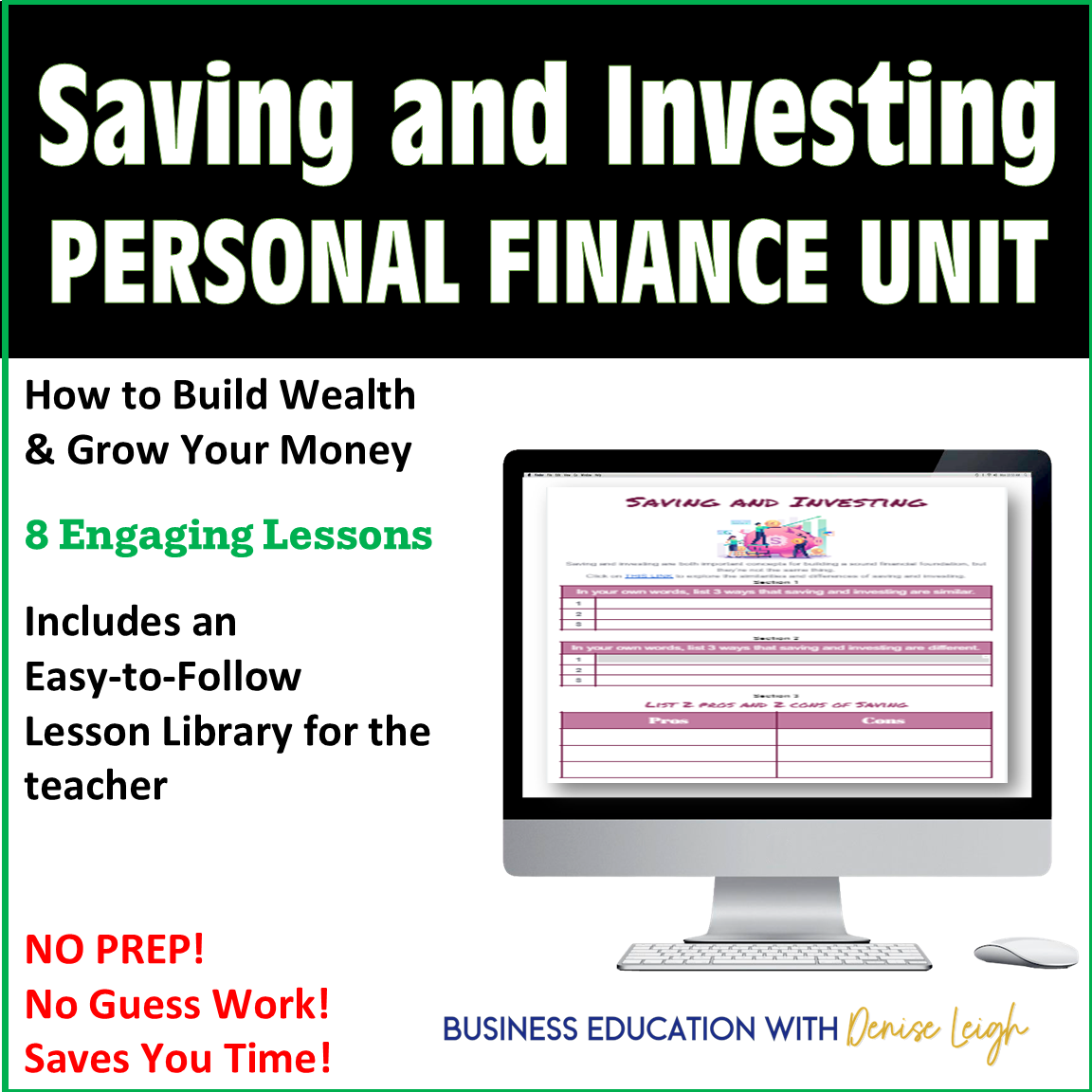
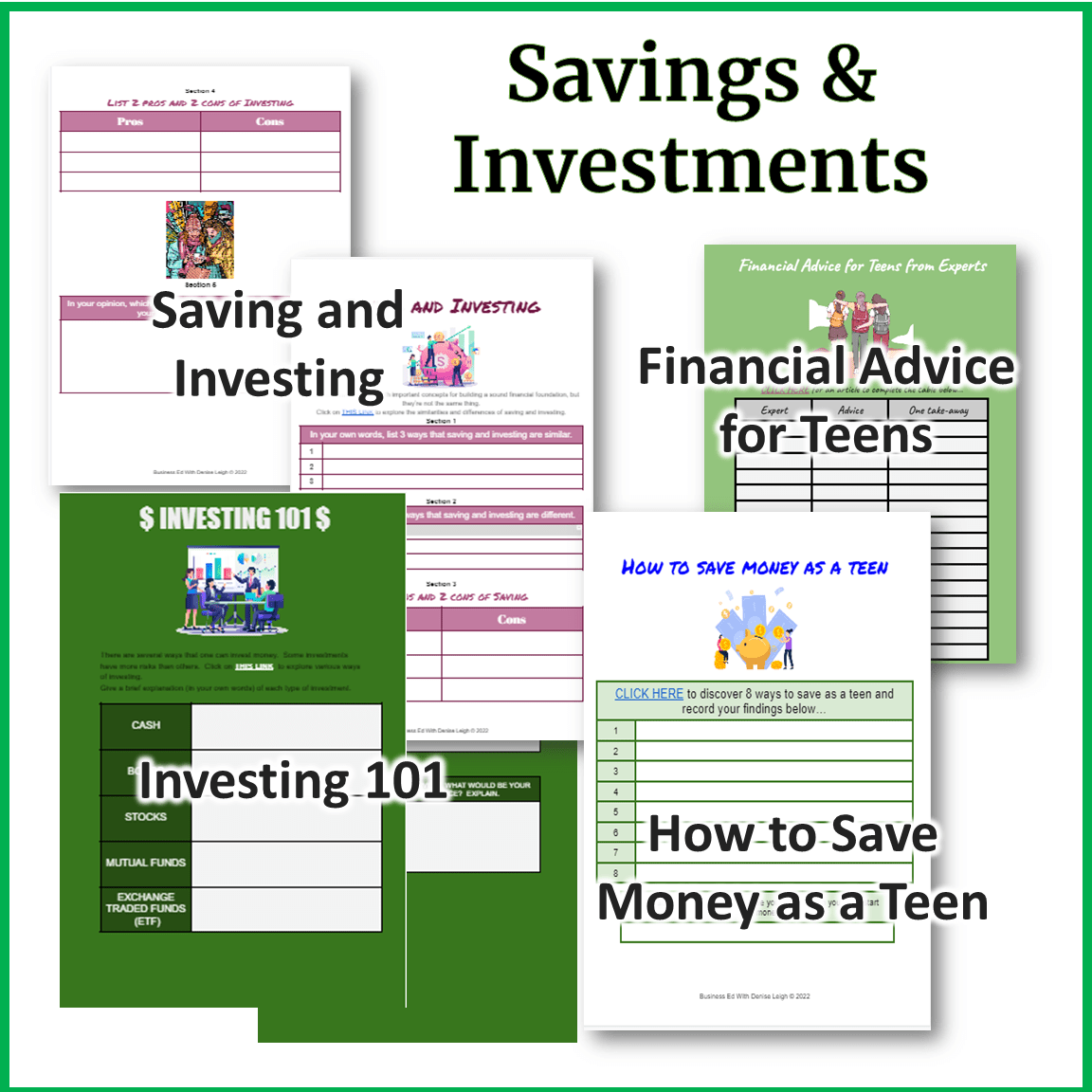
Teach students how to build wealth and make smart financial decisions with this engaging Saving and Investing Unit designed for Personal Finance and Financial Literacy classes. This no-prep digital unit introduces students to essential saving and investing concepts through real-world examples, guided discovery, and critical-thinking activities.
Students learn why saving matters, how investing works, and how smart financial habits lead to long-term financial security and grows wealth—skills they will use for the rest of their lives.
✅ Perfect for 6th, 7th, 8th, 9th, 10th, 11th, and 12th grades (Middle School & High School alike) including homeschool and higher education

Teach students how to build wealth and make smart financial decisions with this engaging Saving and Investing Unit designed for Personal Finance and Financial Literacy classes. This no-prep digital unit introduces students to essential saving and investing concepts through real-world examples, guided discovery, and critical-thinking activities.
Students learn why saving matters, how investing works, and how smart financial habits lead to long-term financial security and grows wealth—skills they will use for the rest of their lives.
✅ Perfect for 6th, 7th, 8th, 9th, 10th, 11th, and 12th grades (Middle School & High School alike) including homeschool and higher education
Eight (8) Saving and Investing Lessons Included:
What Are the Learning Objectives❓
Students Will Learn To:
Why Teachers Will ❤️ This Unit
🏫 What Class Is This Resource For?
This unit is a perfect fit for:
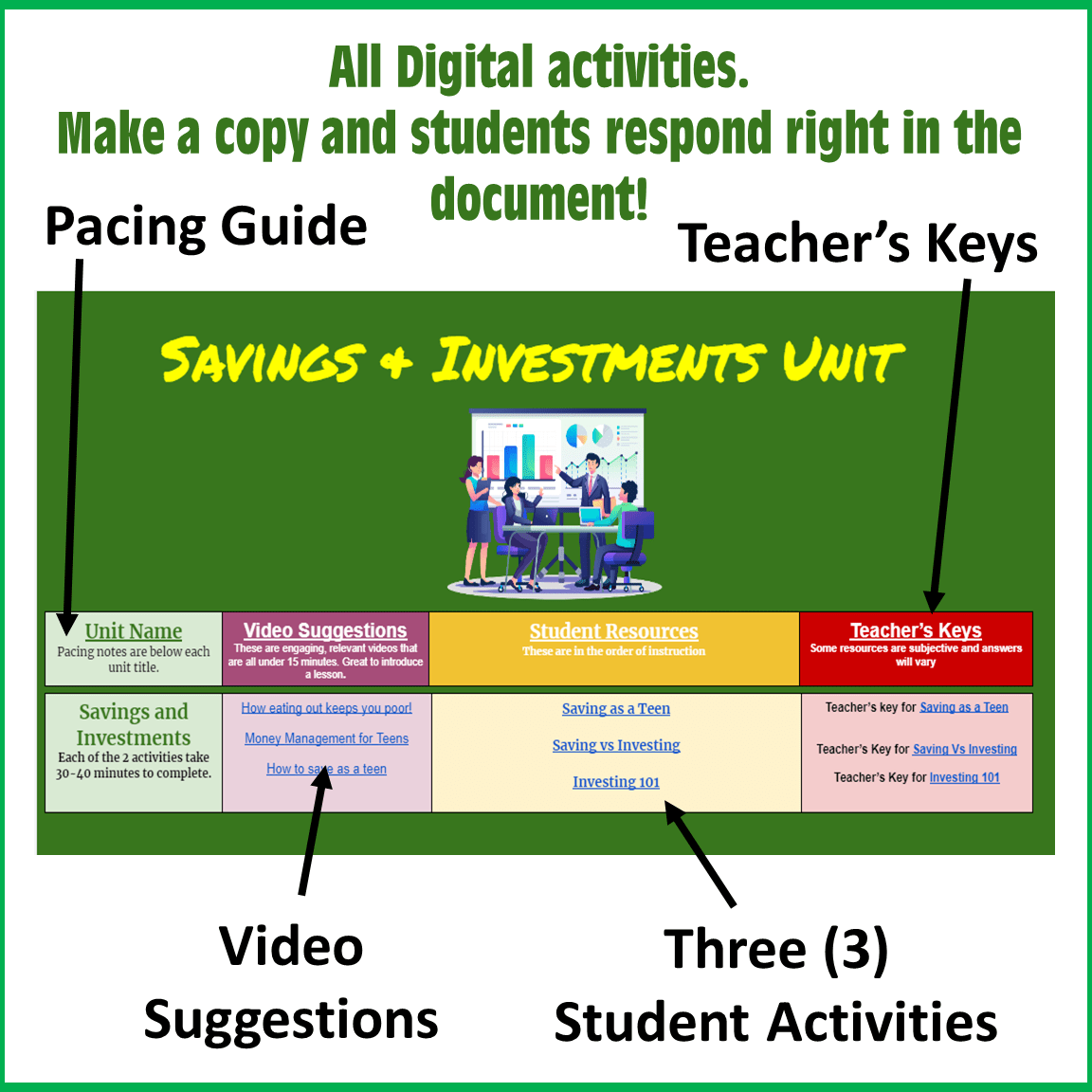
✅ What’s Included?
⏱️ Teaching Duration: 1+ week of teaching materials
💡 All resource links are flattened so students cannot copy/paste answers — ensuring authentic learning and critical thinking.
🚀 A Must-Have Personal Finance Unit
This Saving and Investing Unit equips students with the knowledge and confidence to make informed decisions about money, build wealth over time, and understand the power of saving early.
What are other educators saying?
⭐⭐⭐⭐⭐
Used this assignment in my Personal Investing class as a part of the first unit, Savings vs Investing. Students enjoyed completing the assignment and sharing their responses. Thank you for sharing this assignment.
⭐⭐⭐⭐⭐
This helped so much with my Personal Financial Literacy class. It was very easy to follow for both myself and my students!
⭐⭐⭐⭐⭐
The Saving and Investing unit is a remarkable educational experience that equips participants with essential financial literacy skills. I highly recommend this unit to anyone eager to enhance their saving and investing knowledge!
TEKS Alignment (Texas Essential Knowledge and Skills)
This resource aligns with §113.76 Personal Financial Literacy and Economics, including:
Pennsylvania (PA) Standards Alignment 22 PA Code Chapter 4 – Appendix F (Personal Finance Standards)
This resource aligns directly with Pennsylvania’s Academic Standards for Personal Finance, specifically within the Saving & Investing (17.4) strand and related financial decision-making standards.
Saving & Investing (17.4) – Grades 9–12
Students will:
Personal Finance Fundamentals (17.1) – Grades 9–12
Supporting Standards Connections
This lesson also supports: