
$ 30.00
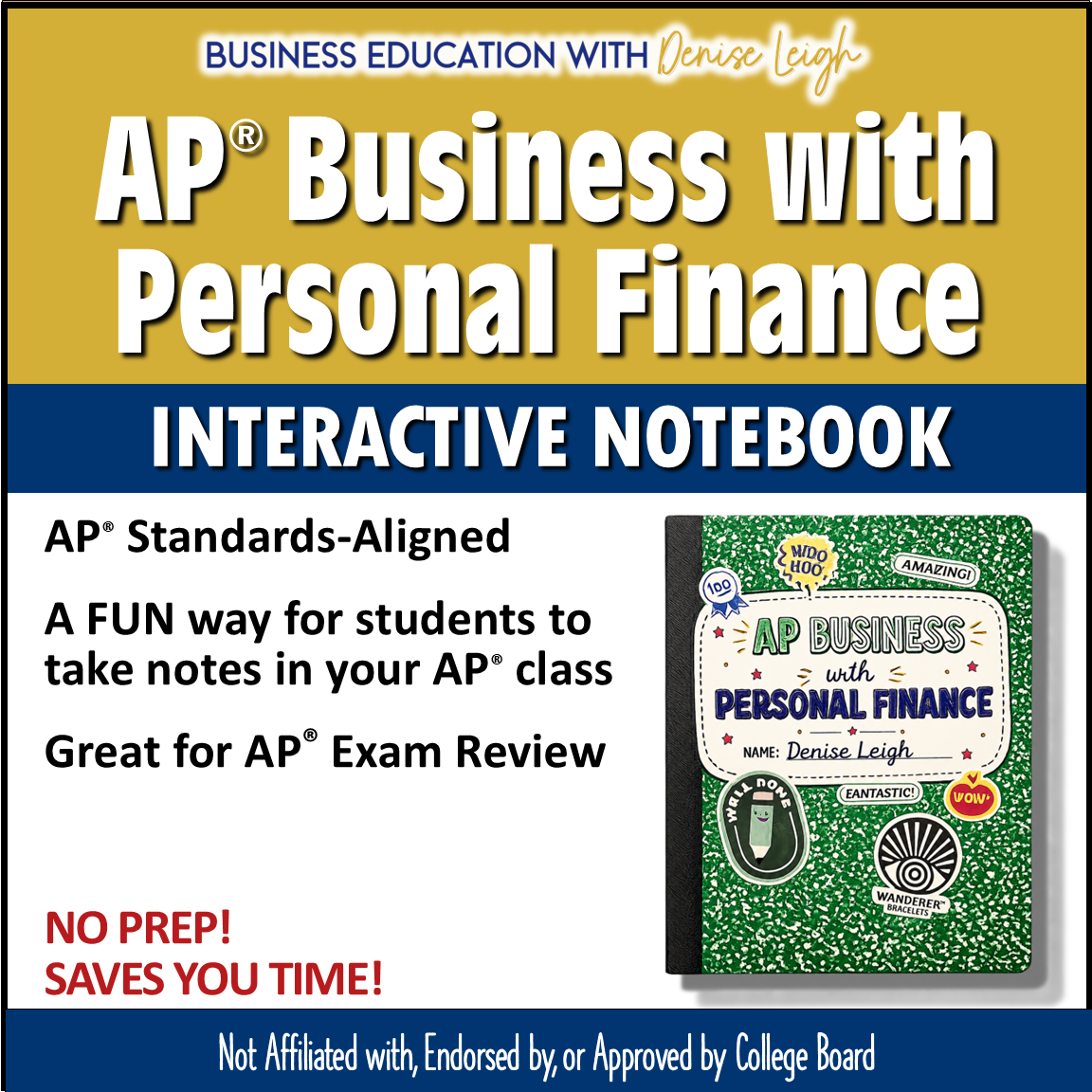
Make AP® Business with Personal Finance more engaging, organized, and memorable with this comprehensive Interactive Notebook designed specifically to follow the NEW 2026–2027 AP® Business with Personal Finance course framework.
This 26-page printable notebook gives students a structured and creative way to interact with course content while reducing screen time and increasing engagement. Rather than simply viewing slides or taking loose notes, students actively organize, record, and reinforce key concepts throughout the year.
Research consistently shows that the more ways students interact with content, the stronger their understanding, retention, and long-term recall. This interactive notebook helps students process information visually, organize concepts, and build a personalized study resource they can use all year long.

Full-Year Student Interactive Notebook | 2026–2027 AP® Standards Aligned | Printable PDF
Make AP® Business with Personal Finance more engaging, organized, and memorable with this comprehensive Interactive Notebook designed specifically to follow the NEW 2026–2027 AP® Business with Personal Finance course framework.
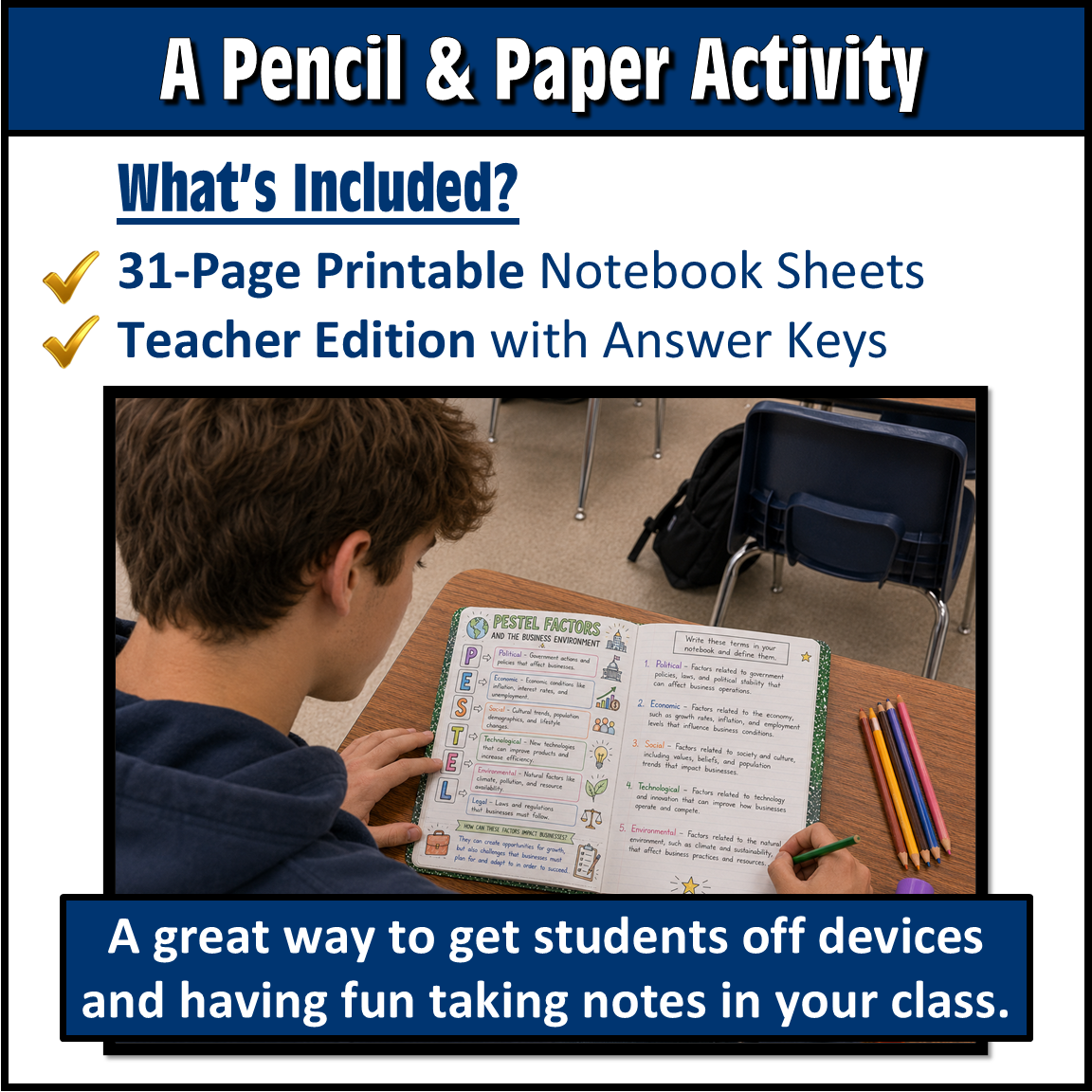
This 31-page printable notebook gives students a structured and creative way to interact with course content while reducing screen time and increasing engagement. Rather than simply viewing slides or taking loose notes, students actively organize, record, and reinforce key concepts throughout the year.
Research consistently shows that the more ways students interact with content, the stronger their understanding, retention, and long-term recall. This interactive notebook helps students process information visually, organize concepts, and build a personalized study resource they can use all year long.
⭐ This is the perfect companion resource for my AP® Business with Personal Finance curriculum and is designed to follow the Units and Modules outlined in the AP® handbook framework.
✅ Perfect for 9th, 10th, 11th, and 12th grades (High School)
Why Teachers Will ❤️ This Interactive Notebook
✔️ NO PREP – Simply Print and Distribute
✔️ Great for AP® Exam Review
✔️ Easy to print and implement
✔️ Designed specifically for the NEW 2026–27 AP® Business with Personal Finance course
✔️ Follows the Units and Modules outlined in the AP® handbook
✔️ Gets students off devices and actively engaged with learning
✔️ Creates an organized year-long study resource
✔️ Encourages note-taking, processing, and retention of key concepts
✔️ Helps reinforce classroom lessons and discussions
✔️ Excellent review tool for quizzes, tests, projects, and exams
What’s Included❓
✔️ 31-Page Printable AP® Business with Personal Finance Interactive Student Notebook
✔️ Two page-size options for classroom flexibility (composition notebook and full-size 8.5″ x11″)
✔️ Completed Teacher Edition with answers for the content pages
✔️ Teacher Instructions
✔️ Grading Suggestions
✔️ Illustrated Computer Applications content pages
✔️ Vocabulary Connection activities
✔️ Bell-ringer / Exit-ticket questions
✔️ Printable PDF files
✔️ Composition notebook and 3-ring binder are NOT included.
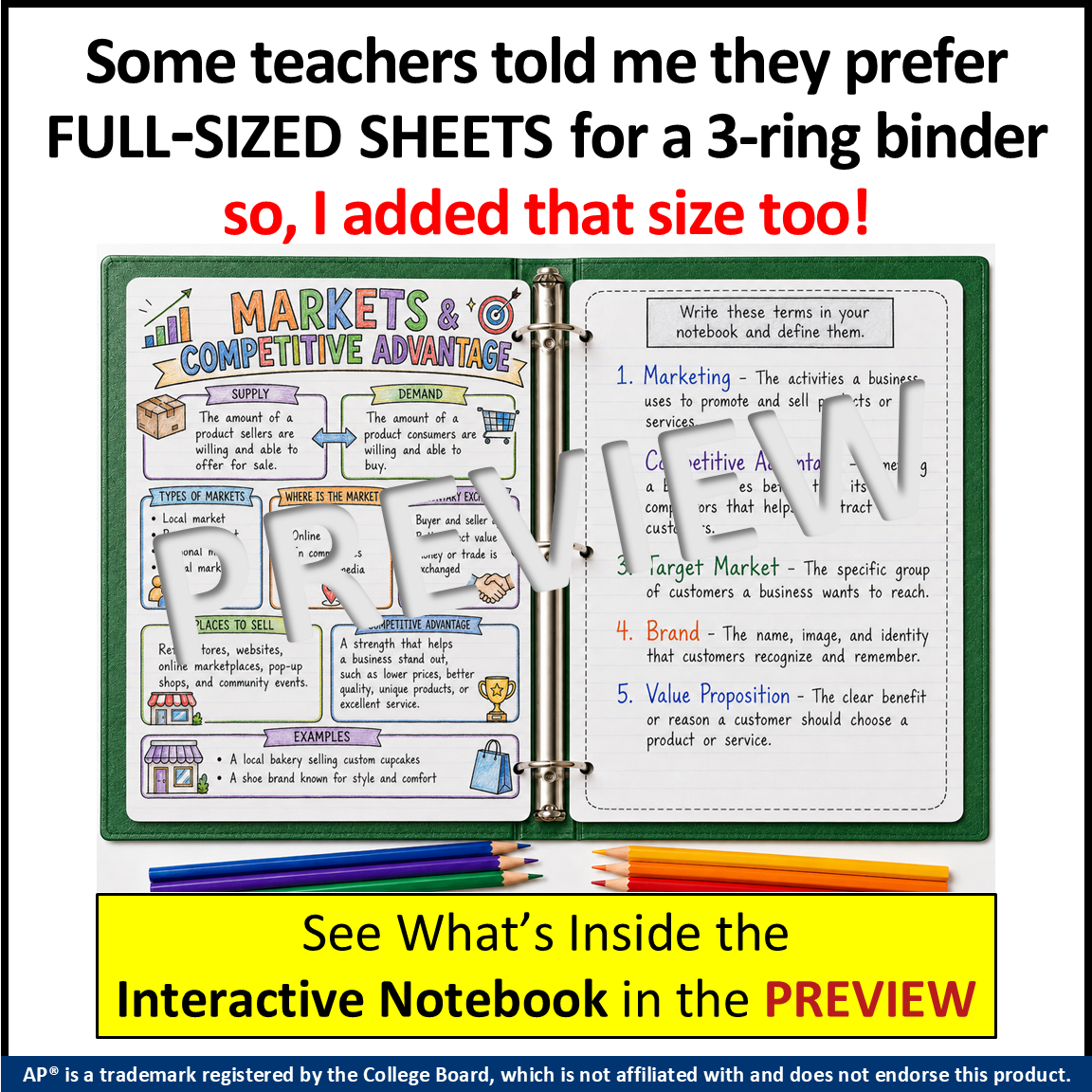
The resource includes pages designed for a traditional interactive notebook as well as full-size 8.5″ × 11″ sheets for teachers who prefer students to keep their work in a 3-ring binder.
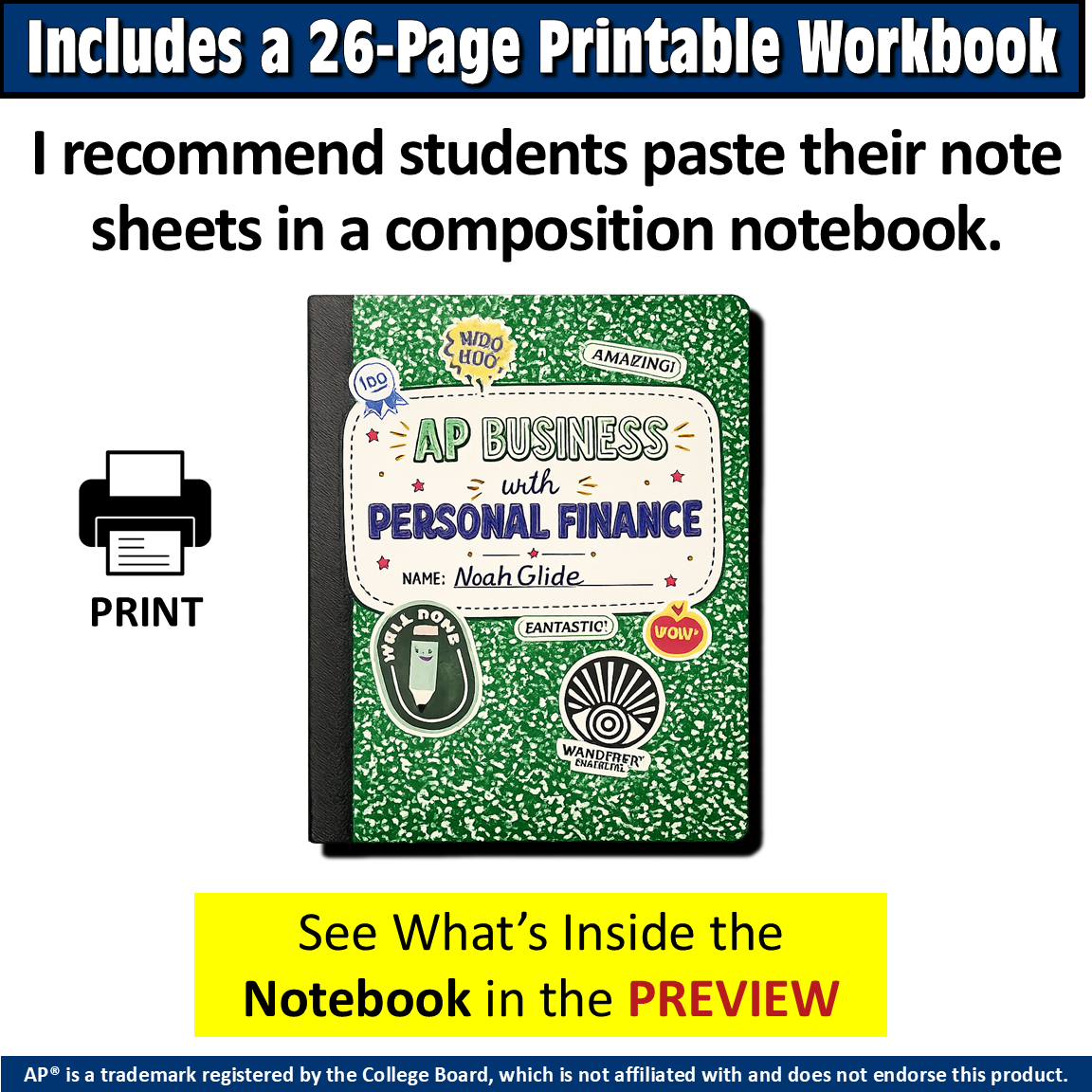
📌 Print the notebook pages and have students paste them into a composition notebook to create a complete AP® Business with Personal Finance Interactive Notebook for the entire school year.
📌 Use alongside classroom lessons, discussions, activities, projects, and assessments for maximum effectiveness.
📌 Students can reference their notebooks throughout the course as a study guide and review resource.
⏱ Teaching Duration
Designed for use throughout a full-year AP® Business with Personal Finance course.
🏫 Standards Alignment
Designed to align with the NEW 2026–2027 AP® Business with Personal Finance course framework and follows the Units and Modules outlined in the AP® handbook.
📥 File Type: Printable Google Slides files (or convert to pdf or PowerPoint).
Students may use the pages in:
✔️ A composition notebook
OR
✔️ A 3-ring binder using the included full-size sheets
It is not an editable digital notebook.
⭐Perfect for Device-Free Days⭐
The AP Business with Personal Finance Interactive Notebook covers these main content topics, in order:
🎯 This interactive notebook provides students with a fun, organized, and effective way to engage with AP® Business with Personal Finance content while building a valuable year-long study resource that supports understanding, retention, and academic success.
Disclaimer: AP® is a trademark registered by the College Board, which is not affiliated with and does not endorse this product.
Only logged in customers who have purchased this product may leave a review.


Reviews
There are no reviews yet.